The call for papers is closed.
Please discover below our guest speakers:
 |
From individual susceptibility
to common mechanisms:
how genetics and epigenetics shed light on our understanding
of FASD |
 |
Challenges and pitfalls of estimating FASD prevalence:
share of fetal alcohol harm
to common but substantial neurodevelopmental hazard |
Dr. Nina Kaminen-Ahola,
University of Helsinki, Finland |
Pr Jürgen Rehm, |
| DE/CA Hamburg, Toronto |
| Dr. Kaminen-Ahola is an Associate Professor in Epigenetics in the Department of Medical and Clinical Genetics, University of Helsinki, Finland. Her lab aims to understand how our phenotypes are formed by our genome, early life environment, and stochastic events. Her focus is on the epigenome and its role as a mediator of environmental influences. By revealing the molecular mechanisms of environmental-induced epigenetic alterations as well as their consequences on gene regulation and embryonic development, she will clarify the etiology of complex phenotypes in health and disorder. |
Pr. Jürgen Rehm is senior scientist in the Institute for Mental Health Policy Research at the Centre for Addiction and Mental Health (CAMH). He is a professor and inaugural chair of addiction policy in the Dalla Lana School of Public Health at the University of Toronto. He is a leader in generating and analyzing the scientific data needed to inform clinicians and policymakers on strategies to reduce alcohol-, tobacco-, and other drug-related harms. His recent research has more and more included interactions between socio-economic status, poverty and substance use, including analysis of policies and interventions with respect to reducing or increasing inequalities. |
 |
Whole-person, Whole-Community: Advancing comprehensive care and support for people with FASD |
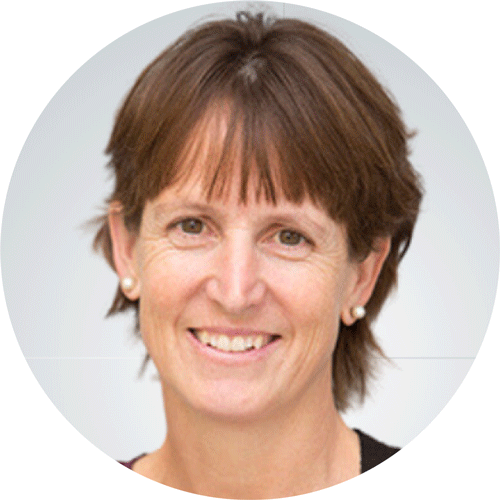 |
Multimodal brain phenotype in FASD: what do we learn from longitudinal birth cohorts? |
Natasha Reid,
University of Queensland,
Brisbane, Australia |
Ernesta Meintjes,
Cape Town, South Africa |
| Dr. Reid is a Clinical Psychologist and Senior Research Fellow at the Child Health Research Centre. She leads the Perinatal and Early Life Exposures Research Group which is dedicated to uncovering the foundational influences on lifelong health and well-being. Her research focuses on the critical impact of environmental, nutritional, substance exposures such as prenatal alcohol exposure, and psychosocial factors during the perinatal and early childhood periods on long-term health outcomes. By advancing our understanding of these early exposures, they aim to inform public health strategies, improve clinical practices, and ultimately enhance the health and well-being of future generations. Their work contributes to reducing the burden of chronic diseases and mental health disorders, promoting healthier developmental outcomes, intergenerational health benefits and fostering resilient communities. Her clinical research interest includes developing and implementing effective preventive interventions for prenatal exposures, improving assessment methods and accessibility to services and early detection for FASD, developing and implementing effective interventions to improve outcomes for children with FASD and their families. |
Pr. Meintjes is senior Biomedical Imaging Researcher, Director of the Cape Universities Body Imaging Centre MRI unit, Division of Biomedical Engineering, Acting Head of the Human Biology Department
Her research – in the field of Developmental Neuroscience, Neuroimaging, Neurophysiology & Neuroanatomy – focuses on developing motion-robust methods to acquire MRI, and the application of these methods to study diseases and conditions particularly relevant to South Africa, which include studies on the effects of prenatal insults and diseases, such as HIV, maternal alcohol or drug use during pregnancy, as well as antiretroviral drugs taken by HIV-infected pregnant women, on brain development.
|

Authors are invited to submit abstracts to be considered for the 8th European Conference on FASD.
All submissions must be made electronically via the submission form on the congress home page.
Please read the guidelines detailed below before proceeding with your submission.
• Abstract submission opens on Tuesday, September 16, 2025
• Abstract submission deadline: Sunday, March 1st, 2026, until 23:59h. (CET)
PLEASE NOTE
Abstracts on works already published by the time of the last EUFASD Conference (Sept. 2024) will not be considered, as well as those presented at a previous EUFASD conference.
All the proposals must be submitted in English. Please properly check English language and spelling before submission.
ABSTRACT FORMAT
Maximal length of 350 words, not including title and authors.
Title and authors must not be included in the text of the abstract. There are special text fields to include this information in the next page of the submission form.
One table, image or figure is allowed, optional, not exceeding 500ko but with sufficient resolution, not exceeding half a page (Arial 10 for table), complementing but not replacing the text of the abstract which must remain fully comprehensible without it.
A maximum of 10 authors can be listed, one place in the list can be for et alii/aliae.
Suggested abstract structure:
• Background,
• Objective,
• Methods,
• Results,
• Conclusions.
ABSTRACT SUBMISSION PROCESS
All submissions must be made electronically via the submission system on the Conference home page.
When finishing the submission process, submitter/corresponding author should receive an acknowledgement
e-mail with a reference number. If not, please contact eufasd2026@ptolemee.com
Submitter author will be able to modify the abstract before the submission deadline through the online submission form. Access to previous submission will require the given email and the password received in the acknowledgement email after submission.
All submissions are subjected to a peer-review process to secure high quality.
A notification of acceptance or rejection will be only sent to the submitter (corresponding author). It is his/her responsibility to notify other authors. Notification to the authors is expected from beginning of April,
to be confirmed.
If the abstract is accepted the presenting author needs to be registered on due date to confirm participation in the program and to attend the Conference to present the contribution. Otherwise, the contribution will be withdrawn from the Conference program.
TOPICS
Papers can cover a wide scope of topics:
1. Pathophysiology
2. Epidemiology
3. Prevention & harm reduction
4. Diagnoses
5. Brain, cognition & behaviors
(neurophenotype)
6. Prognosis
7. Interventions & care
8. Adulthood & lifelong burden
9. Empowerment & advocacy
10. Policies |
HIGHLIGHTS
Among these topics, special emphasis would be placed on:
a. key mechanisms of alcohol developmental toxicity
and susceptibility
b. cumulative vulnerabilities and comorbid risk factors
c. accuracy and reliability in epidemiological estimates
d. prevention and harm reduction in high-risk population
e. improving diagnosis of non-syndromic forms of FASD:
▪ etiological specificity and differential workup
▪ (bio)markers beyond facial feature and exposure report
f. neurodevelopmental disorders (NDDs) and FASD:
▪ brain and neurodevelopmental phenotype
▪ meaning and coordinate use of the different types
of diagnoses
g. evidence-basing for unspecific and
FASD-designed interventions (incl. domain-specific therapies, educational programs, supportive services)
h. anticipation and prevention of secondary disabilities
and disorders
i. relationships, emotional and sexual life
j. justice and protection
k. life paths, care paths, barriers and facilitators
(incl. foster care, accessibility, professionals' awareness
and families' involvement)
l. expectations and challenges of new technologies
|
When submitting, the authors can be asked to qualify their paper into one of these categories in the Key words:
• Preclinical & translational research
• Clinical trial & care expertise
• « Living with FASD »: people & community (caregivers, family...) perspectives
• « What happens in my country? »
Please indicate one of the major topics (1, 2, 3...) and, if possible, in the Key words, a highlight (a, b, c...).
SCHOLARSHIPS
A few scholarships will be awarded to make it easier for some who need to participate, for instance juniors.
Stay tuned for terms and conditions for application: eufasd2026.com/scholarships
PRESENTATION PREFERENCE
When submitting, the authors can be asked to choose presentation-type preference and mention
it in the submission type:
1) Oral paper presentation (9 parallel sessions in 3 slots) :
9 min short oral communications + 3-4 min questions
2) Poster paper presentation (2 dedicated poster sessions) :
3 min live presentation + 1 question, at least 2 parallel chaired visit groups
(please note that) a few papers of particular interest regarding the conference program could be proposed with a longer plenary oral presentation by the scientific planning committee.
The final decision about the presentation format will be determined by the Scientific Committee after the reviewing process and this decision will be final.
FOR MORE INFORMATION
For all questions related to abstract submission, please contact eufasd2026@ptolemee.com |